



A Micro-Chip Shortage Will Impact Supply – Does it Have to Disrupt the Consumer Shopping Experience Too?
The shortage will make accurate incentives and rebate setting more challenging for the manufacturers. In turn, dealers will struggle with how to set prices and payment offers as a result.

The shortage will make accurate incentives and rebate setting more challenging for the manufacturers. In turn, dealers will struggle with how to set prices and payment offers as a result.
As we’re about to enter year two of the COVID-19 pandemic, the auto industry is facing a continued production and supply challenge stemming from the pandemic, but not because factory workers are being told to stay home.
The chips are used in everything from engine management systems, bluetooth, road navigation and collision-detection systems, and – remarkably - they can comprise as much as 40% of a new car's cost.
This time around, a shortage of semiconductor chips, which are also used to build other consumer electronics in high demand, are causing supply backlogs for the production of new vehicles.
The Latest on Semiconductor Chip Shortage
Semiconductor chips today are a critical part of the vehicle build process. The chips are used in everything from engine management systems, bluetooth, road navigation and collision-detection systems, and – remarkably - they can comprise as much as 40% of a new car's cost, according to Deloitte1.
Research firm, AutoForecast Solutions, recently increased its estimate of the number of cars and trucks that will not be produced because of these supply problems.
Globally, the forecasting firm said that the automotive industry had already announced volume cuts totaling 680,350 vehicles — up from 202,000 vehicles in January. The firm also believes that number may increase to 1,321,701, as additional auto plants and their supply partners run out of chips; as many as 338,822 vehicles are expected to fall out of North American production plans2.
How a Chip Shortage Affects Car Shopping
The shortage will make accurate incentives and rebate setting more challenging for the manufacturers. In turn, dealers will struggle with how to set prices and payment offers as a result. Finally, for consumers it can be expected that the shortage of supply will result in increased MSRPs.
Even before the pandemic and chip shortage, one of the major concerns among consumers was their inability to shop for a car online and seamlessly complete the transaction at the dealership. Consumers simply don’t understand why the monthly payment they were quoted online is different when they get to the store.
In fact, a recent survey we conducted revealed that 43% of consumers are frustrated that their online offer is different from what they are presented with at the dealership. This is important because 21% of shoppers say they walk away from a deal when this discrepancy is $50 or more per month; this number quickly jumps to 48% when the difference between what is quoted online and in the store is $75 a month.
For dealers who are not using technology solutions that empower them to provide identical price quotes online and in the store, nearly half of their car shoppers will walk away because the payments offered at the store are different from what they were offered online!
How Will Chip Shortages Impact Manufacturers’ Incentive Programs
Payments quoted to consumers are often shaped by manufacturer incentives and rebates, and the new chip-driven supply challenges will only exacerbate the inexact science manufacturers use in determining these.
Manufacturers spend billions of dollars each year on incentives to move inventory to achieve a desired market penetration. Traditionally, the car makers go through a labor-intensive process to analyze the data related to the effectiveness and impact of the incentive and rebate programs they are offering. This is done to determine how best to position themselves competitively – and to determine how much they have to spend to earn their desired market share.
The process is time consuming, mechanical and unsophisticated. Decisions are often made on gut instinct – without having all of the facts. Not only is this very expensive (and seldom accurate), it is also not timely and provides openings for competitors to step in and win market share.
Almost every dealer in the country has experienced an inability to collect rebate and/or incentive monies from their manufacturer because of the misapplication or improper combination of rebates. When this happens there are two options: Rewrite the contract, which always upsets the customer, or take the difference out of the gross.
The data and technology platforms needed to overcome this are available, all of which will greatly enhance the customer experience. Manufacturers, lenders and dealers can now be seamlessly tied together in a complete system that offers a portal and a dashboard containing all pertinent data necessary to build, offer and transact. This technology includes a solution that mines, analyzes and manages the billions of combinations and iterations of all lender and manufacturer programs available in the marketplace and finds truly superior, scientifically perfect solutions for all stakeholders: consumers, dealers, lenders and manufacturers.
Furthermore, today’s best and most comprehensive solutions enhance the consumer experience and the showroom process by electronically presenting all payment and purchase options to customers with full compliance and transparency – on any computer, tablet or mobile device – at any/all points along the consumer’s shopping journey. As a result, the process can dramatically shorten transaction times, raise dealership efficiencies and margins, and elevate customer satisfaction as a result of a more streamlined process.
With these new technologies available to the entire automotive eco system, all parties involved can quickly adapt to changes caused by a disruption to supply - without compromising the optimal shopping experience for the customer.
Rusty West is President and CEO of Market Scan Information Systems.
Originally posted on F&I and Showroom
More Fixed Ops
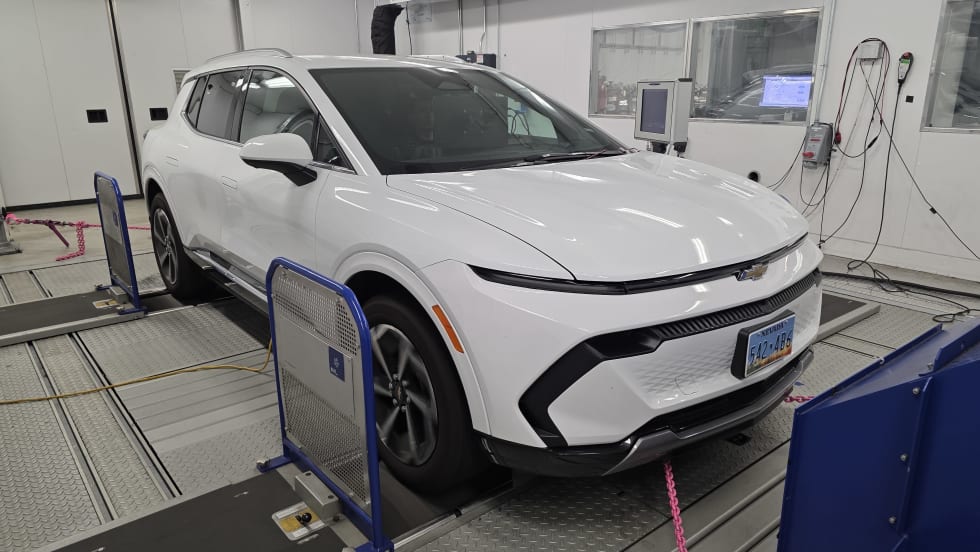
Extreme Temps Hinder EV Efficiency
American consumers might be happy to know that their preferred hybrids are slightly less impacted by extreme temperatures than fully electric vehicles, according to a new study.
Read More →
Ban on Air Bag Inflators by Chinese Maker Proposed
NHTSA blames 10 deaths and two serious injuries on what its investigators believe were illegally imported air bag inflators. It’s taking public comments before deciding whether to ban them outright.
Read More →
Fix It Forward Program Helps Man Regain Mobility
Albuquerque consumer who suffered a life-changing injury regains the use of his vehicle after Fiesta Volkswagen's service team shared his story with DOWC Cares.
Read More →
ASE Connects Partners With Worldpac to Build Technician Numbers
The collaboration is intended to help auto dealerships, automakers and after-market shops further develop the technician pipeline.
Read More →
Not as Tickled With Tires
U.S. consumers are finding less satisfaction with the rubber that meets their roads, though their loyalty to tire brands has lately inched up.
Read More →
Auto Recalls Sank Last Year
2025 Sedgwick data indicate that the number of vehicles affected fell to its lowest point in more than a decade.
Read More →
ASE Winter Registration Now Open
The deadline to register for the industry standard certification testing is March 31.
Read More →
U.S. Drivers Overdue for Major Services
Data shows dealers have ample opportunity ahead of the holiday travel season.
Read More →
Auto Dealers Losing Service Customers
Study finds that though overall service drive revenue is up, loyalty is eroding
Read More →
Jeeps Can Catch Fire
Hundreds of thousands recalled, some for second time, to address battery flaw
Read More →