



Nissan Ups Its EV Game
Plans to offer six electrical vehicle nameplates that comply with US local sourcing rules for EV tax credits by 2026.

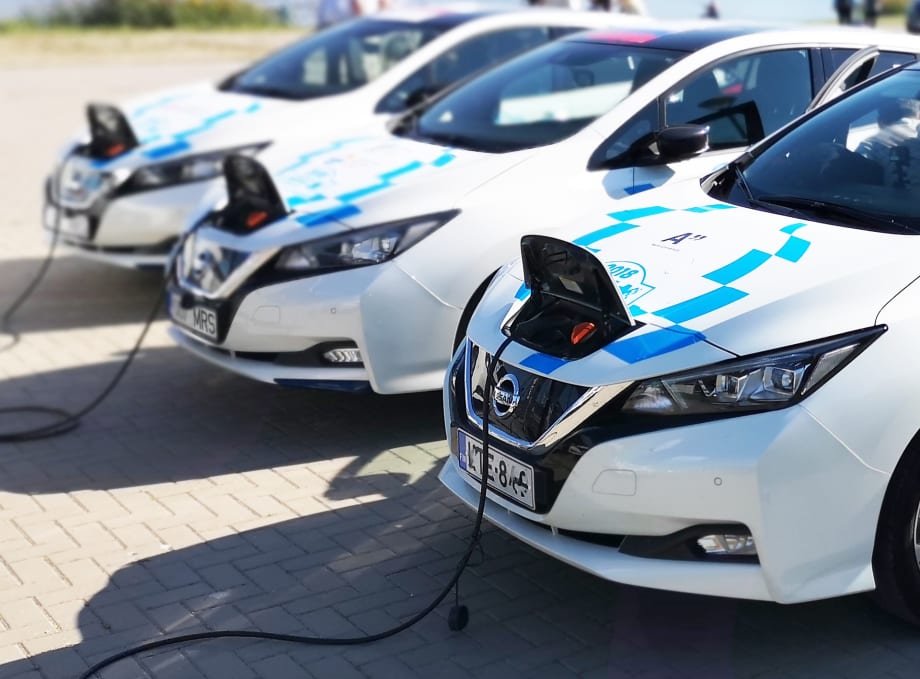
Nissan plans to offer six EV nameplates that are eligible for EV tax credits by 2026.
Image by Nerijus jakimavičius
Nissan plans to offer six electrical vehicle nameplates that comply with U.S. local sourcing rules for EV tax credits by 2026, the company announced in a press conference.
The automaker will meet the Inflation Reduction Act’s requirements for the tax credits by complying with the rules of final assembly, content from foreign entities of concern, and the localization of battery components and minerals, Chief Operations Officer Ashwani Gupta told reporters.
The automaker also reported plans to consolidate platforms and drivetrains to make its EVs more competitive.
By 2026, the company’s EV lineup will include a next-generation Leaf hatchback, the Ariya crossover, and four new Nissan/Infiniti manufactured at its Canton, Miss. plant. The latter models, which include two sedans and two crossovers, will qualify for the full $7,500 EV federal tax credit.
“We at Nissan are confident that we will be complying for IRA with localization starting in CY 2026,” Gupta said at the briefing.
Plans to meet localization requirements include manufacturing electric powertrains locally and possibly revamping the company’s Decherd, Tenn. engine plant to make EV powertrains. Currently, the automaker imports electric powertrains from Japan for Leaf assembly in Smyrna, Tenn.
The automaker is also considering a second source for batteries in the U.S. Its current supplier, Envision AESC, makes batteries at the Smyrna factory complex.
According to Gupta, localizing mineral supply will present the biggest challenge.
“[Meeting] IRA is challenging, but on the other side, it’s an opportunity to accelerate the competitive electrification,” Gupta told reporters. “The question is how we manage that transition to full localization.”
Nissan forecasts over 44% of its U.S. sales will be electric by 2030, up from an earlier prediction of 40%. Last year, Nissan North America sold 729,350 vehicles in the U.S. but just 12,025 Leafs and 201 Ariyas.
The automaker also raised its outlook for EV sales in Europe, now expecting EVs to comprise 98% of its sales volume by 2030, compared to an earlier goal of 75%. The goal includes fully electric EVs, as well as hybrids.
Globally, Nissan aims to get 44% of its sales from EV or e-Power hybrid vehicles by 2030, up from the 40% announced in November 2021 under its Ambition 2030 plan.
Nissan will streamline engineering efforts by simplifying powertrain designs and consolidating platforms to cut cost and weight.
Gupta said the company will also speed its shift to software-defined vehicles. The automaker hopes to derive revenue from in-vehicle services in the U.S. and European markets from the fiscal year starting April 1.
“We need to shift from products only to products plus services,” Gupta said.
The automaker plans to expand the functionality and frequency of over-the-air vehicle software updates. Toward the end of the decade, updates will happen as often as every three months and cover such systems as autonomous driving and electrified powertrain settings.
By 2025, Gupta said, Nissan will design and code all software running key mobility technologies inside the car. Key systems covered will include Nissan’s ProPilot automated driving setup, energy management and mobility services.
More Dealer Ops

Ladies and Gentlemen, This Is a Dealership: Why the Fundamentals Still Decide Who Wins
A teaching moment by a legendary football coach happens to apply perfectly in the auto retail space. Learn what it is and how to use it to your store’s advantage.
Read More →
Timing the Market Can Hurt Long-Term Program Performance
For dealer-owned reinsurance entities, avoiding volatility entirely can mean falling behind inflation and missing market rebounds that drive long term surplus growth. Missing just a handful of strong market days can materially impact cumulative returns—an important reminder for long horizon trust and investment strategies.
Read More →
Dealer Ads and the FTC
The agency has made it clear in recent enforcement actions and warnings, in auto retail and other industries, that advertised prices must include all nonoptional costs to the consumer.
Read More →
Used Autos Supply Dwindles
The March shopping surge, despite high prices, cut into inventory by the most since the thick of the pandemic, Cox Automotive analysts calculated.
Read More →
Managing Risk Effectively Through Changing Times
The variables influencing risk pricing have changed significantly over the past five years. Being proactive and responsive to emerging trends is not optional but essential.
Read More →
Survey Reveals What Won't Fix What's Breaking Car Sales
AutoPayPlus says extra-long auto loans are trapping consumers and threatening the dealer trade-in cycle, and that the industry is leveraging the wrong tools to combat high MSRPs.
Read More →
IA American Appoints Two Execs
Senior vice presidents of the company's agent and dealer channels chosen to support general agents and help auto dealers with sales and performance.
Read More →
Cox Automotive Acquires Inspection Firm
Full ownership of Alliance Inspection Management, or AiM, meant to unlock growth for Manheim inspection capabilities
Read More →
Assurant Expands Partnership With Holman
Extended collaboration delivers training, products and performance development to 30 newly acquired Holman dealerships
Read More →
Franchises, Throughput Down in First Half
A handful of states see franchise growth through June, while EV sales per store boost overall business in U.S.
Read More →