



Calif. Dealers Score Partial Victory With Passage of Dealer Protection Bill
While the bill further strengthens dealer protections and updates others, several protections aimed at future services and opportunities for automakers to serve customers directly were stripped out of the bill prior to last Thursday’s unanimous vote by the California Legislature.
SACRAMENTO, Calif. — In the final hours of the state’s 2018 legislative session, the California Legislature passed a wide-ranging bill aimed at strengthening and updating California’s new motor vehicle franchise laws. Its passage wasn’t a complete victory for the California New Car Dealers Association (CNCDA), which has lobbied for the bill since it was introduced in February by Assemblymember Eloise Reyes (D-San Bernardino).
Missing from the final bill, which was approved last Thursday by a 77-0 vote, were protections addressing future services and opportunities for automakers to serve customer directly. The legislation, AB 2107, now heads to Gov. Jerry Brown’s desk. He has until Sept. 30 to veto or sign the bill. If no action is taken, the legislation will take effect Jan. 1, 2019.
“Thanks to the stewardship of Assemblymember Reyes, the passage of AB 2107 is a huge victory for all Californians, local businesses and consumers alike,” said CNCDA President Brian Maas. “If signed by the Governor, the passage of this bill brings California’s new motor vehicle franchise laws further into the 21st century by establishing a level playing field between local independently-owned dealerships and multinational vehicle manufacturers.”
If enacted, the legislation will add further clarifications related to retail reimbursements on warranty work and customer retail pay. It will also expand the types of protests dealers can file with the state’s New Motor Vehicle Board regarding manufacturer encroachment; would deem a facility upgrade requirement as unreasonable if a facility was modified in the last 15 years; and builds upon existing law requiring that all performance standards be reasonable with a dealer’s demographics, market characteristics, allocation, local and state economic circumstances, and historical performance of the line-make.
Additionally, the bill allows dealers to select their own digital service vendors, restricting manufacturers from selecting specific vendors for their dealers to use. It also restricts a manufacturer’s ability to force dealers to repair a vehicle that a dealer is not allowed to sell or lease.
The legislation also preserves the state’s existing statutory disclosure dealers are required to give to consumers when a non-OEM endorsed F&I product is sold, thereby prohibiting OEMs from instituting their own disclosure form as General Motors did last summer. The bill also clarifies that treating dealers differently when providing financing or advancing money because the dealer sold a non-approved product is prohibited.
Stripped from the approved legislation, however, was a proposed statewide ban on automakers engaging in direct-to-consumer sales. The language would have modified the state’s existing guideline, which states that an automaker can’t compete against a same-brand dealership within a relevant market area.
Additionally, another provision was stripped from the bill earlier this summer that would have banned automakers from offering subscription programs unless they use their dealers to operate them.
“Franchise laws exist to govern the relationship between dealers and manufacturers, and California was overdue for significant improvements in the laws that will continue to protect dealers, their businesses and their customers,” Maas said. “We are pleased and encouraged that the California State Legislature unanimously agrees and supports our approach to improvements in California’s franchise laws.”
Originally posted on F&I and Showroom
More Dealer Ops

Ladies and Gentlemen, This Is a Dealership: Why the Fundamentals Still Decide Who Wins
A teaching moment by a legendary football coach happens to apply perfectly in the auto retail space. Learn what it is and how to use it to your store’s advantage.
Read More →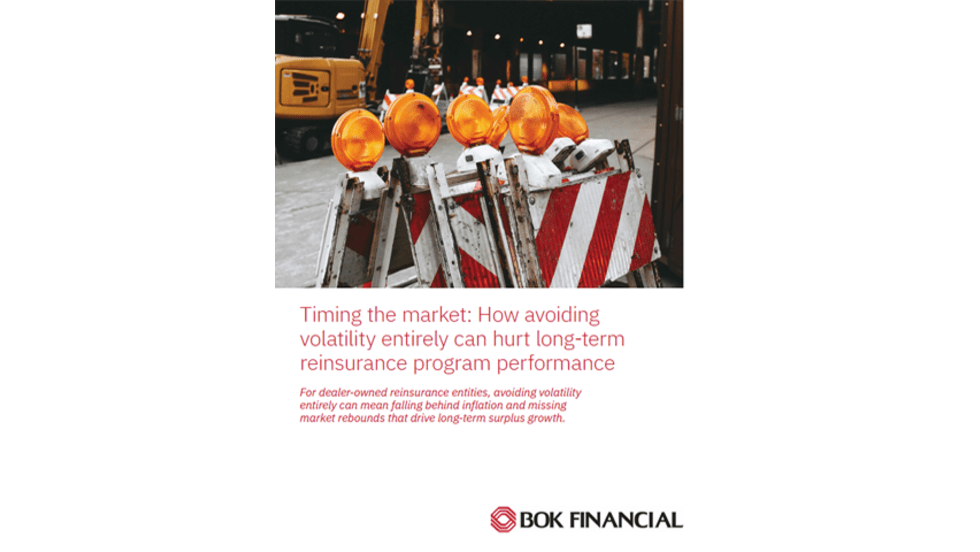
Timing the Market Can Hurt Long-Term Program Performance
For dealer-owned reinsurance entities, avoiding volatility entirely can mean falling behind inflation and missing market rebounds that drive long term surplus growth. Missing just a handful of strong market days can materially impact cumulative returns—an important reminder for long horizon trust and investment strategies.
Read More →
Dealer Ads and the FTC
The agency has made it clear in recent enforcement actions and warnings, in auto retail and other industries, that advertised prices must include all nonoptional costs to the consumer.
Read More →
Used Autos Supply Dwindles
The March shopping surge, despite high prices, cut into inventory by the most since the thick of the pandemic, Cox Automotive analysts calculated.
Read More →
Managing Risk Effectively Through Changing Times
The variables influencing risk pricing have changed significantly over the past five years. Being proactive and responsive to emerging trends is not optional but essential.
Read More →
Survey Reveals What Won't Fix What's Breaking Car Sales
AutoPayPlus says extra-long auto loans are trapping consumers and threatening the dealer trade-in cycle, and that the industry is leveraging the wrong tools to combat high MSRPs.
Read More →
IA American Appoints Two Execs
Senior vice presidents of the company's agent and dealer channels chosen to support general agents and help auto dealers with sales and performance.
Read More →
Cox Automotive Acquires Inspection Firm
Full ownership of Alliance Inspection Management, or AiM, meant to unlock growth for Manheim inspection capabilities
Read More →
Assurant Expands Partnership With Holman
Extended collaboration delivers training, products and performance development to 30 newly acquired Holman dealerships
Read More →
Franchises, Throughput Down in First Half
A handful of states see franchise growth through June, while EV sales per store boost overall business in U.S.
Read More →